SEO in the Age of AI: What Still Works, What's Dead, and What's New
Search isn't dying. The strategy that ranked 18 months ago is. Here's what's changing in SEO as AI Overviews, ChatGPT, and Perplexity rewrite how people search.

Mark Cijo
Founder, GOSH Digital
I'm going to tell you something you won't hear from agencies still selling 2023 SEO retainers: search isn't dying. It's mutating. And if your only SEO strategy is "rank for high-volume keywords," you're not playing the right game anymore.
Here's what's actually happening — and what we're doing about it for clients.
What changed in the last 18 months
Three things stacked on top of each other and broke the old playbook.
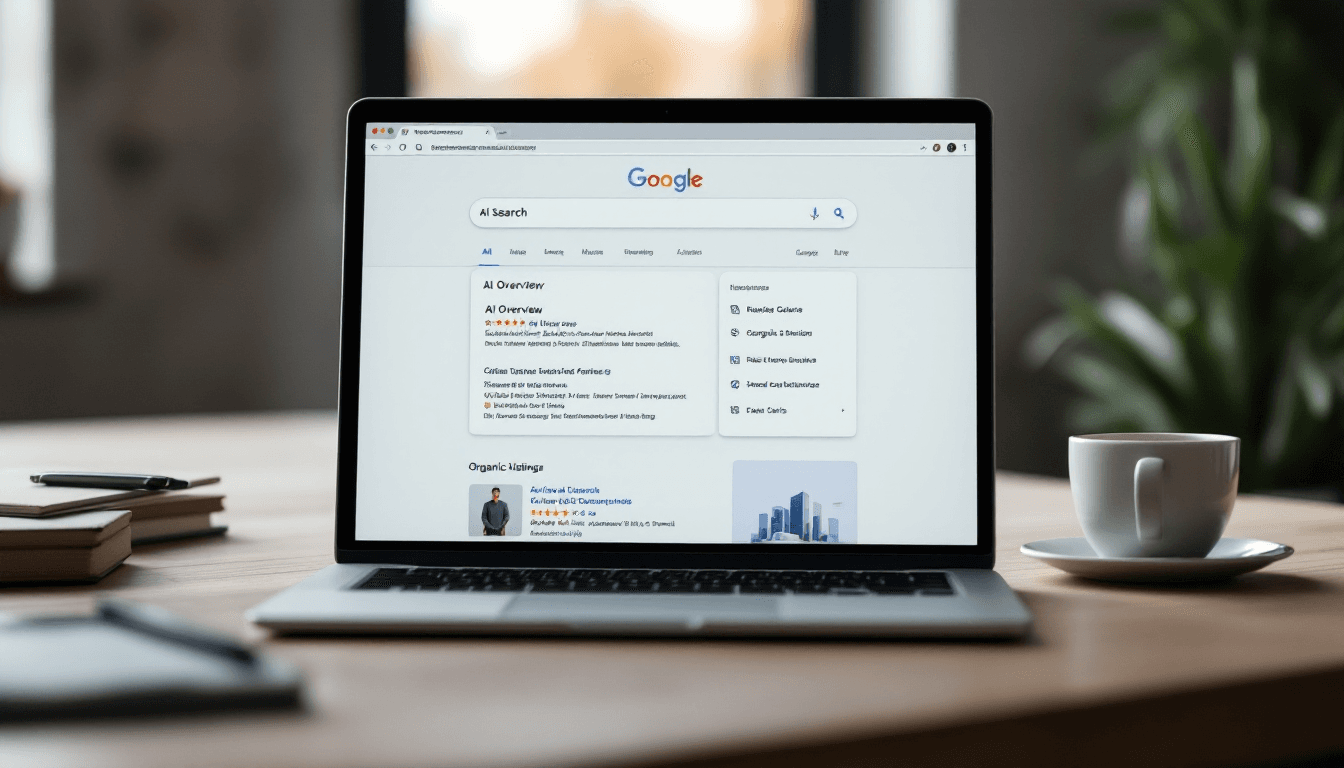
Google AI Overviews now sit above the first organic result for about 30% of all queries (and the share keeps climbing). When the AI Overview answers the question, click-through to the underlying pages drops by 30–60% depending on query type. Informational queries took the worst hit.
ChatGPT and Perplexity are now meaningful traffic sources — not big yet, but growing fast. People are asking "best Klaviyo agency for Shopify" inside ChatGPT before they ever open Google. The brands cited in the answer get the call. The brands not cited don't even know they were considered.
Google's helpful content update + the spam updates of 2024–2025 wiped out a lot of programmatic AI content that ranked thinly. Sites with generic AI fluff lost 60–80% of their organic traffic in a single update. Sites with real expertise, real authors, real data — those held up. The bar moved. We covered the practical implications in our take on AI in eCommerce marketing earlier this year.
What's dead
Let's just name it.
- Generic "top 10 X" listicles with no original perspective. AI Overviews summarise these in two sentences. Nobody clicks.
- Keyword-stuffed content with no entity coverage. Google reads pages as concepts now, not as keyword density.
- Programmatic AI content with no human review. The 2024 Spam Updates and the 2025 Helpful Content tweaks specifically targeted this. If your strategy is "spin 500 pages from GPT and pray" — you've already lost.
- Backlinks as the primary lever. They still matter. But "we did 50 guest posts last month" is no longer the move it was in 2019.
- Optimising for clicks on the SERP. Optimise for citations in the AI Overview and in answer engines now. That's where the visibility is moving — we broke down the exact structure that earns those citations in our AI search optimization guide.
What still works (and works harder than ever)
This is the unsexy part. It's also the part that's printing money for our clients.
1. Real expertise, written by named humans
Google's quality raters look for the entity behind the content. So do AI models when they decide who to cite. A blog post by "Admin" on a generic agency site doesn't get cited. A blog post by Mark Cijo, founder of a Klaviyo Gold Partner agency with 150+ clients, does.
Show your face. Cite your data. Name your sources. Reference your client work (with permission). This isn't optional anymore.
2. Definitive answers in the first 100 words
AI Overviews and Perplexity pull from the first chunk of the page that answers the question directly. If you bury the answer under three paragraphs of context, you lose the citation. Lead with the answer. Then expand.
We rebuilt every pillar page on our site around this. Lead paragraph = the answer. Below that = the depth. Citations in AI Overviews jumped within weeks.
3. Schema markup actually matters now
Structured data was always "nice to have." Now it's how AI models verify what your page is about. We layer in:
Article+Authorschemas on every blog postOrganizationschema withsameAslinking to our LinkedIn, Twitter, etc.FAQPageon long-form posts (still wins featured snippets even with AI Overviews live)BreadcrumbListsite-wide
Side note — we recently shipped a full site-wide SEO overhaul where we found 11 of 28 audited pages were canonical-leaking to the homepage. That alone was tanking crawl quality. Fix the boring stuff first. If your site needs the same treatment, that's exactly what our SEO and content marketing services ship: technical audit, content rebuilds, and the schema scaffolding that signals authority to both Google and AI engines.
4. Brand searches are the new high-intent traffic
When someone Googles "[your brand] vs [competitor]" or "[your brand] reviews," they're 5x more likely to convert than someone searching a category keyword. AI Overviews don't hurt brand searches — they often amplify them by showing your brand info card.
So the new SEO playbook for eCommerce brands isn't "rank for 'best dog collar'." It's "make people search for your brand." That's PR, social, podcast appearances, partnerships, comparison content from third parties. Then optimise the brand SERP so when they search, they convert.
5. The citation footprint matters more than the backlink profile
We track which sites cite our clients across AI models now. The pattern: brands that get mentioned in 50+ relevant sources (podcasts, industry publications, founder interviews, niche forums) get cited in ChatGPT and Perplexity. Brands with 500 random links from low-quality sites don't.
Quality of mention > quantity of link. That's the shift.
What's new (and worth investing in)
Generative Engine Optimization
GEO is the awkward name for "make sure ChatGPT and Perplexity cite you." The early playbook:
- Write content that answers questions completely, not partially
- Use clear, declarative sentences (LLMs struggle with hedged language)
- Include current data and timestamps (LLMs prefer recent sources)
- Get cited by sites that already get cited (Wikipedia, Reuters, niche authority sites)
We're now tracking client visibility in ChatGPT and Perplexity weekly. It's the new "rank tracker."
Entity-based content architecture
Stop building content around keywords. Build it around entities — your brand, your service categories, your founders, your client industries. Each entity gets a definitive hub page. Each hub page links to supporting content. Each piece of supporting content reinforces the parent entity.
Google's Knowledge Graph runs on entities. AI models run on entities. Your content should be organised the same way.
Programmatic SEO — done right
Programmatic still works. But it has to be data-driven, not template-spun. We just shipped 1,300+ programmatic landing pages targeting service + location combinations — see the Shopify-focused service pages and our paid media surface as examples — each populated from a real data source with original analysis. That's different from generating 5,000 generic pages from a content brief. The first wins. The second gets a manual penalty.
What I'd do this quarter if I were starting fresh
- Audit your top 50 pages by traffic. How many of them got hit when AI Overviews launched in their query category? That's your urgent fix list.
- Rewrite intros to lead with the answer. Every blog post. First 100 words = the answer.
- Add author bios with credentials. Real photos, real LinkedIn links, real bylines.
- Schema audit. If you don't have Article + Author + Organization + Breadcrumb at minimum, you're losing AI visibility.
- Start tracking ChatGPT and Perplexity citations for your top 20 commercial queries. Free tools exist; some paid ones are better.
- Build brand search demand through podcasts, PR, founder content. SEO without brand demand is harder every quarter.
That's the work. None of it is glamorous. All of it compounds.
The honest truth
The brands winning at SEO in 2026 aren't the brands with the most pages or the most backlinks. They're the brands with real expertise, named experts, structured content, and a footprint across the sources AI models trust.
Search didn't die. It just got harder to fake.
If you want to see what this looks like applied at scale, our Phoenix case study walks through what happens when content, email, and technical infrastructure all compound — $15.8M in email revenue over 31 months with email accounting for 47.61% of total store revenue. Or for the email-side build of the same playbook, see TheLiquorStore.com's 296.9% YoY revenue growth and RealGreek's 220% YoY growth — both leaned heavily on the entity-and-authority approach for cluster authority.

Written by Mark Cijo
Founder of GOSH Digital. Klaviyo Gold Partner. Helping eCommerce brands grow revenue through data-driven marketing.
Book a free strategy call →