The Metrics
- 296.9% YoY growth in attributed revenue (Q1 2024)
- 328% YoY increase in flow revenue
- 234% YoY increase in campaign revenue
- $279,229.30 total revenue in Q1 2024 (+149.8% YoY)
- $103,231.22 Q1 2024 attributed revenue
- $666,623.08 full-year 2023 revenue (+35.5%)
- 80.6% YoY increase in Q4 2023 total revenue
Before: A Business That Only Made Money Three Months a Year
Q1 in liquor retail is dead.
January through March — post-holiday hangover (pun intended). Everybody spent their money in December. They're doing Dry January. They're not buying $60 whiskey. Every spirits retailer knows this. It's just the way it is.
Or so TheLiquorStore.com thought.
When we started working with them, the email marketing reflected that assumption. Holiday season got all the attention — big campaigns, SMS pushes, gifting guides. Q4 was the money quarter. Then January hit and... crickets. A couple of generic "New Year, New Spirits" emails. Maybe a Valentine's promo in February. Then wait for summer.
The rest of the year wasn't much better. Outside the obvious holidays, the email campaigns were one-size-fits-all. A whiskey collector and a wine enthusiast and a tequila fan all got the same send. "Check out our latest arrivals." Cool. Which arrivals? For whom? The emails weren't bad. They just weren't specific enough to make anyone click.
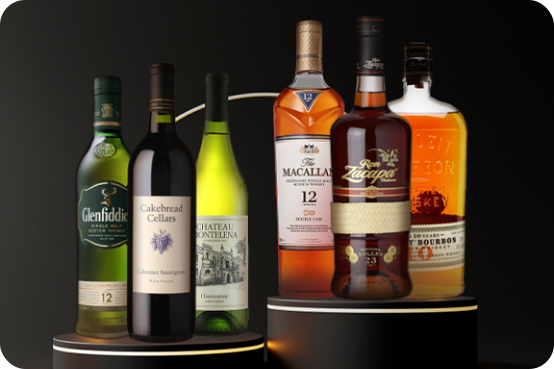
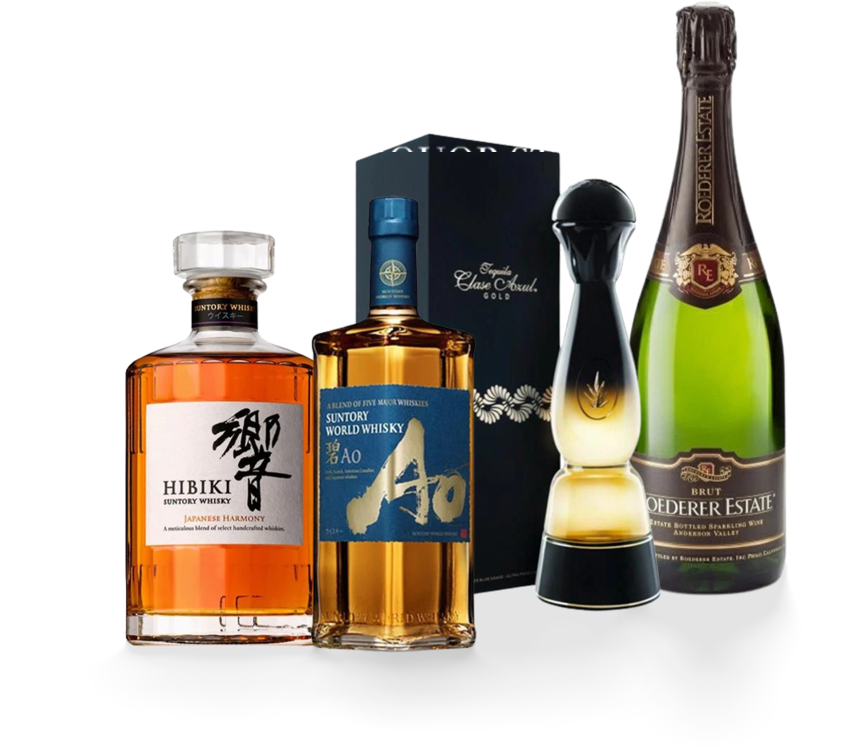
TheLiquorStore.com is a Brooklyn-based retailer with a massive catalog. Craft spirits, fine wines, everyday staples, seasonal releases, allocated bottles. The product range was a strength in-store. In email, it got treated like one big undifferentiated blob.
The business had accepted the revenue roller coaster. Big Q4, decent summer, dead Q1.
We didn't accept it.
After: Nearly 4x Revenue in the "Dead" Quarter
Full Year 2023
- Annual revenue reached $666,623.08 — a 35.5% increase, which was the warm-up act
- Attributed revenue grew 58.4% as email and SMS started pulling more weight
- The new segmented flows + quarterly cadence went live and began compounding
Q4 2023 (Holiday Season)
- Revenue jumped 80.6% YoY — we didn't just ride the holiday wave, we built a bigger one
- Gifting-specific campaigns and SMS countdowns drove serious incremental revenue
- Automated flows triggered on holiday browse behavior caught shoppers other brands missed
Q1 2024 (The Quarter That Changed Everything)
- Total revenue: $279,229.30 — a 149.8% YoY increase
- Attributed revenue: $103,231.22 — a 296.9% YoY increase
- Flow revenue grew 328% YoY — automations fully mature and compounding
- Campaign revenue grew 234% YoY — segmented sends converting at rates we hadn't seen before
Let that Q1 number sit for a second. January through March. The quarter every liquor retailer writes off. We nearly quadrupled attributed revenue. Not during the holidays. Not during a big promo. During the quarter the whole industry assumes is unwinnable.
That's not a seasonal bump. That's proof a dead quarter doesn't have to be dead.
How We Got There
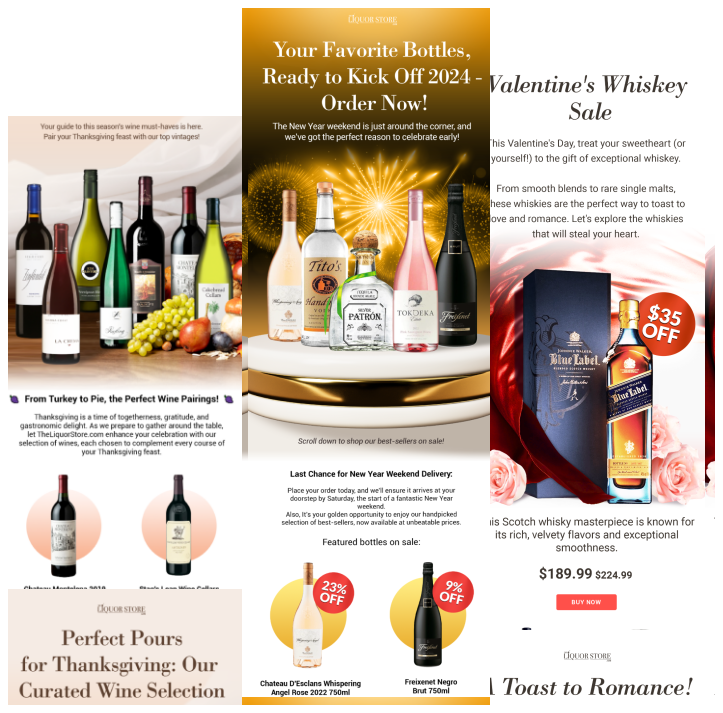
Two things changed everything. First, we stopped treating the customer list as one audience. Second, we built a strategy for every quarter — not just the profitable ones.
1. Segmentation by spirit preference was the foundation
We carved the list into real segments based on what people actually bought and browsed. Whiskey collectors. Wine enthusiasts. Tequila fans. Vodka buyers. Craft-spirit explorers. Gifters who only showed up in November and December.
Each segment got different content. Whiskey collectors got limited-release alerts, tasting notes, distillery stories, barrel-aged recommendations. Wine enthusiasts got food pairings, regional spotlights, sommelier picks. Tequila got cocktail recipes and new brand features.
This wasn't first-name-in-the-subject-line personalization. It was "we know you've bought three bottles of Japanese whiskey in the last six months — here's a limited Yamazaki release that just came in" level of specificity.
2. SMS as the urgency channel — and only the urgency channel
We were deliberate about this. SMS went out for flash sales, limited inventory alerts (especially for allocated spirits that actually sell out), same-day delivery windows, and holiday countdown reminders. That's it. No "check out our blog." No recycled email content.
Because we used SMS sparingly, it worked. Open rates stayed high. Opt-out rates stayed low. When a text came through from TheLiquorStore.com, people knew it meant something worth looking at right now.
3. Build a strategy for every quarter, not just Q4
Instead of pouring everything into Q4 and coasting the rest of the year, every quarter got a plan.
- Q1 — "New Year, New Tastes" campaign series. Not the lazy "new year new you" angle, but genuinely curated recommendations by segment. Whiskey collectors got suggestions for bottles to start the year. Wine enthusiasts got a "Winter Reds" series. We ran a "Build Your Home Bar" campaign in February that performed absurdly well — because nobody else was marketing to spirits buyers in February.
- Q2 — spring cocktail guides, warm-weather spirit recommendations
- Q3 — summer entertaining content, early gifting nudges
- Q4 — full holiday treatment: gifting guides, corporate gifting packages, countdown campaigns
Every quarter had its own strategy doc, its own campaign calendar, its own goals. That consistency is what killed the revenue roller coaster.
4. The analytics loop kept the whole thing getting sharper
We tracked attributed revenue by campaign and by flow. Conversion rates by segment. A/B tests on subject lines, send times, product positioning, and offer structures constantly. When something worked for the whiskey segment, we tested it on wine. Sometimes it ported. Sometimes it didn't. The data told us.
By Q1 2024, the system was fully mature. Flows had been running long enough to compound. Segments were dialed in. The quarterly strategy was proven. And the "dead quarter" posted a 296.9% increase in attributed revenue.
That's what happens when you stop accepting that some quarters are just slow and start building an email and SMS strategy that works all year.
Related Case Studies
- The Phoenix: $15.8M in Email Revenue Over 31 Months — Our longest-running email case study. Scaling, list cleanup, sustained 30–50% email attribution.
- RealGreek.com: 220% YoY Revenue Growth — Mapping campaigns to a cultural calendar drove 220% growth for a community-driven brand.
- Simpli Home: 153.6% Revenue Boost — Advanced segmentation turned a home furnishings brand's email channel into their most reliable growth engine.
Tired of the Revenue Roller Coaster?
If your business spikes during holidays and flatlines the rest of the year, it's not a seasonality problem. It's a strategy problem. And it's fixable.
Book a free strategy call and we'll show you how to turn your slow quarters into growth quarters.