The Metrics
- 153.6% YoY increase in attributed revenue (Year Two)
- 109.4% increase in total revenue (Year One)
- $1,742,066.01 total revenue in Year One
- $912,248.06 attributed revenue in Year Two
- 194.9% increase in email campaign recipients
- 150.9% increase in conversion value from flows
- 44.3% increase in open rates
Before: One Email. Same Message. Entire List.
That was the strategy.
The 22-year-old furnishing her first studio apartment got the same campaign as the homeowner redecorating a guest bedroom. Same product recs. Same subject line. Same offer. For a brand whose catalog runs from bathroom storage to dining tables to full living room sets, "one size fits all" wasn't simplification. It was the strategy quietly bleeding revenue.
Here's the other thing nobody on the team had stopped to think about: home furnishings aren't impulse buys. Nobody scrolls Instagram and grabs an $800 TV stand on a whim. There's a consideration cycle. People browse. They measure their rooms. They compare three brands. They come back three weeks later. If you're not nurturing that journey with the right thing at the right time, you're losing them to whoever does.
Simpli Home had everything needed to do this well. Purchase history. Browse data. Category preferences. Tags, behaviors, RFM signals. None of it was being used. Campaigns went out on a calendar — Tuesdays and Thursdays, like clockwork — not because the data said those windows converted, but because that was the routine. The whole program was set up to send. It wasn't set up to grow.
What Simpli Home needed wasn't more sends. It was a proper email and SMS marketing strategy.
After: $1.74M in Year One, 153.6% Growth in Year Two

Year One (2022)
- Total revenue hit $1,742,066.01 — a 109.4% increase over the prior period
- Open rates jumped 44.3% because subscribers were finally getting emails they actually wanted to open
- Flow conversion value climbed 150.9% as the rebuilt automations started doing real work
Year Two (2023)
- Attributed revenue reached $912,248.06 — a 153.6% YoY increase
- Email recipients grew 194.9% — nearly tripled the addressable audience
- SMS became a real revenue driver, not a checkbox in the marketing stack
- Email + SMS became Simpli Home's single most reliable growth channel
The part that matters most: Year Two was bigger than Year One. That's not a spike. That's compounding. The system got smarter every month because we kept feeding it better data and tighter segmentation. It didn't plateau. It accelerated.
How We Got There
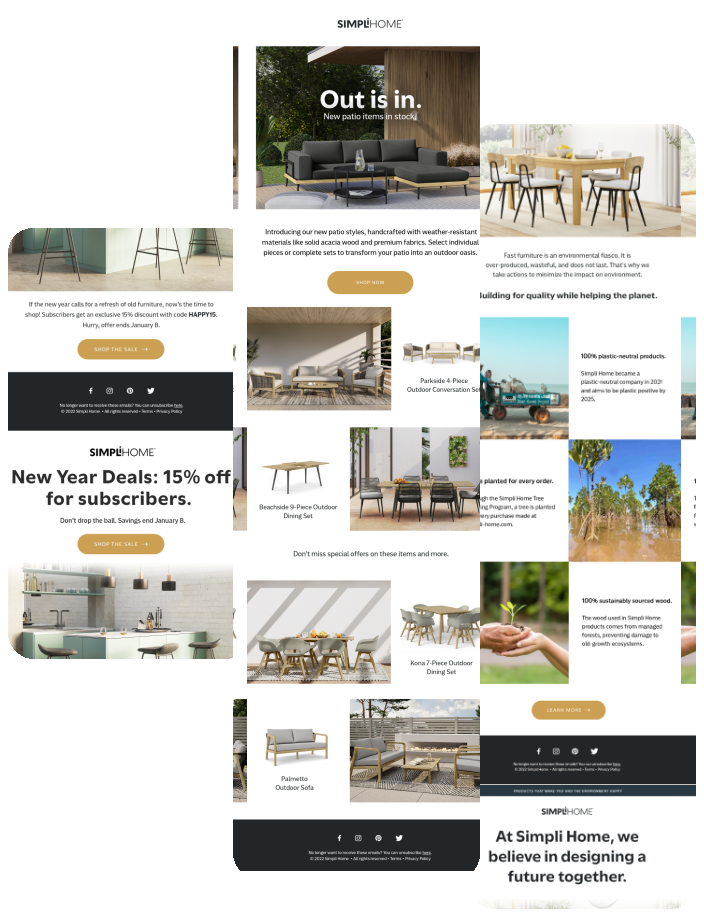
The breakthrough wasn't a new tool. It was a question we asked on every campaign: what does this customer actually need to see right now?
1. We rebuilt segmentation from the ground up
Not "bought" vs. "didn't buy." That's segmentation for beginners.
We segmented by home type. Budget range. Product category interest. Browsing intensity. Someone who spent 20 minutes looking at bathroom vanities got an entirely different email journey than someone who clicked a dining set once.
Apartment dwellers vs. homeowners. First-time buyers vs. redecorators. Storage-focused vs. design-focused shoppers. Each got content, recommendations, and timing matched to where they were in their decision process. Not where the sending calendar said they should be.
2. We layered in SMS — as a partner to email, not a clone of it
Email did the heavy lifting: product education, style inspiration, category guides, considered storytelling. SMS handled urgency: flash sales, back-in-stock alerts, limited-time offers.
Cart abandonment used both, choreographed: email first for the soft touch, SMS 24 hours later for the nudge. The two channels didn't compete. They complemented. And response rates stayed high because we weren't spamming — we were sending things people actually wanted to see.
3. The analytics loop was the engine
We tracked conversion value by flow, revenue per recipient, open rates by segment, click patterns by category. Every week, the data told us something new. This segment responds better to lifestyle imagery. That one converts higher on Sunday evenings. Bathroom storage crushes it in January (New Year's resolution organizing — who knew).
Every insight got fed back into the email marketing strategy. We didn't run campaigns and hope. We ran them, measured, adjusted, and ran better ones next time.
4. We played the long game on the consideration cycle
Home furnishings buyers don't convert on the first email. They convert on the fifth. Or the eighth. Or the one that lands the same week they finally measure the living room.
So we built flows that were patient. Browse abandonment sequences that educated instead of pressured. Post-purchase flows that suggested the next piece in the room — not just a random upsell. The numbers above show what happens when you stop chasing the next campaign and start building a system that compounds.
Related Case Studies
- RealGreek.com: 220% YoY Revenue Growth — Cultural calendar mapping and segmentation tripled attributed revenue for a community-driven brand.
- The Phoenix: $15.8M in Email Revenue — The most complete email case study we've published. Scaling, list cleanup, and sustained 30–50% email attribution.
- TheLiquorStore.com: 296.9% YoY Revenue Growth — Segmentation by product preference turned a spirits retailer's dead quarter into their best one.
Ready to Stop Sending the Same Email to Everyone?
If you're sitting on customer data you're not using — or sending the same campaigns to your entire list and wondering why engagement is flat — we should talk.
Book a free strategy call and we'll show you exactly where the revenue is hiding in your email program.