OpenAI Just Turned ChatGPT Into a Shopping Search Engine.
OpenAI pivoted ChatGPT from Instant Checkout to product discovery in March 2026. 61% of consumers now use AI tools for shopping research.

Mark Cijo
Founder, GOSH Digital
On March 24, 2026, OpenAI made a quiet but significant pivot.
They moved ChatGPT commerce away from "Instant Checkout" — the in-chat purchase experience they launched in late 2025 — and toward product discovery and side-by-side comparison. Checkout itself got pushed back to merchant-controlled paths.
That's not a step backward. That's OpenAI conceding something most agencies haven't admitted: ChatGPT is the new product discovery engine, not the new Amazon. Merchants own the checkout. ChatGPT owns the decision.
And 61% of consumers now use AI tools for shopping research. If your Shopify brand isn't showing up inside ChatGPT's comparisons, you're invisible to a growing share of high-intent buyers at the exact moment they're deciding what to buy.
Here's what's actually happening, and exactly what to do about it.
What ChatGPT product discovery looks like now
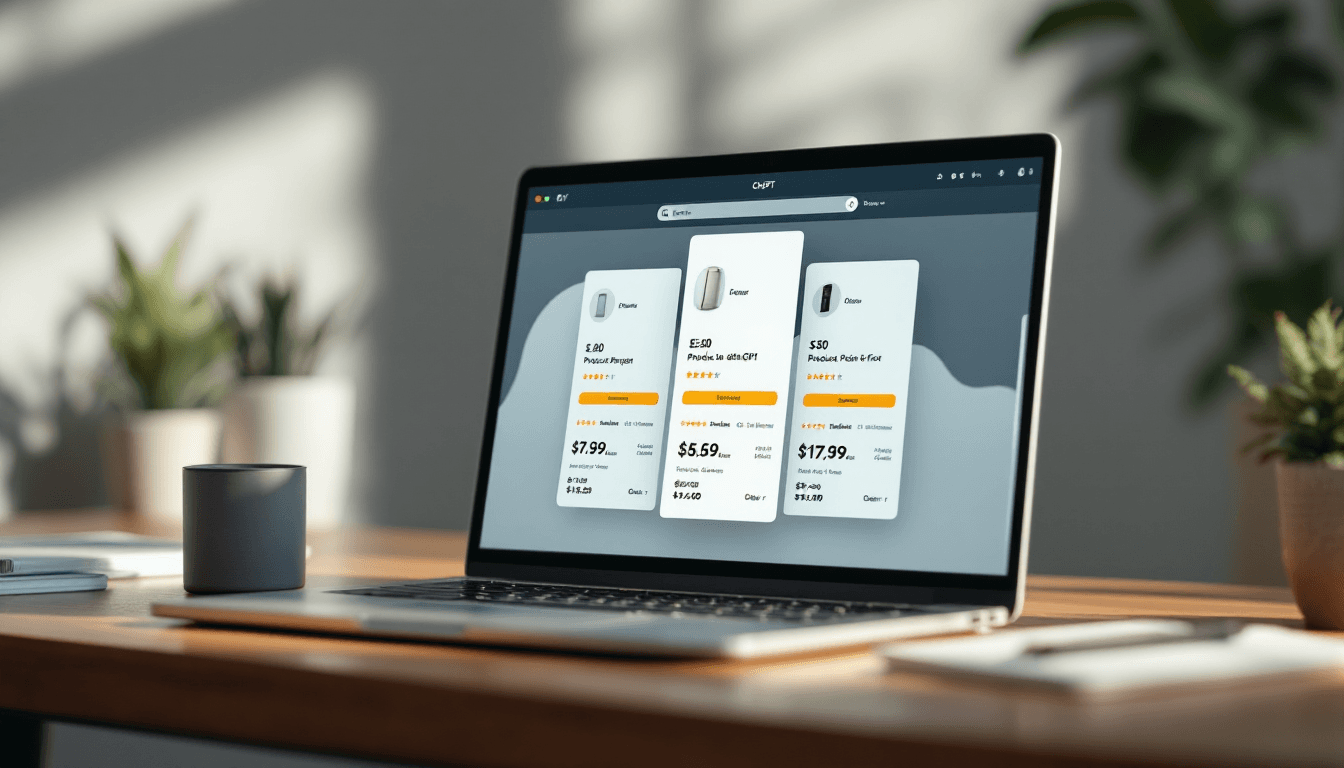
Users can browse products visually inside ChatGPT, compare options side-by-side, upload images as inspiration ("show me something like this"), and refine results conversationally ("show me ones with reviews above 4.5 and under $50"). Products surface with price, reviews, key features, and increasingly, direct merchant attribution — name, brand, retailer.
Behind the scenes, OpenAI has expanded the Agentic Commerce Protocol (ACP) to support product discovery. Target, Sephora, Nordstrom, Lowe's, Best Buy, The Home Depot, and Wayfair have all integrated into ACP for the discovery experience.
Notice who isn't on that list yet: independent DTC brands. Shopify-native brands. Smaller specialty retailers.
That's the gap. And it's exactly the gap that's going to define organic acquisition for the next 24 months.
Why "I rank in Google" no longer means "I show up in ChatGPT"
Most agencies are still selling SEO playbooks designed for the 2022 Google ranking algorithm. ChatGPT's discovery layer doesn't work that way.
ChatGPT pulls product information from:
- The Agentic Commerce Protocol — direct merchant feeds for ACP-integrated retailers (the 7 listed above, expanding fast)
- Web crawl + summarisation — for everything else, ChatGPT crawls your store, your reviews, your blog content, your product pages
- Cross-referenced authority signals — Reddit threads, podcast mentions, news articles, comparison sites. The brands cited in these sources are the brands ChatGPT trusts.
If you're a DTC brand without ACP integration (almost all of you), your visibility in ChatGPT product discovery depends entirely on points 2 and 3. Which means your product pages, your reviews, your structured data, and your citation footprint determine whether you show up.
We covered the broader citation-footprint dynamic in our Google AI Overviews 18-month review — being cited inside AI search results delivers materially more clicks than ranking but not being cited. ChatGPT is the same model. Different model, same dynamic. And the structural fixes that get you cited are the same too — we've laid them out in our guide on how to get cited by ChatGPT and AI search.
What to fix this quarter to show up in ChatGPT product discovery
Five things, in order of priority. None of them require new tools. Most require fixing what's already there.
1. Product pages need to be answerable in plain English
Your product pages were probably designed for Google's algorithm — keyword-stuffed, schema-marked, optimised for ranking. ChatGPT doesn't care about any of that. It cares whether your product page answers the question a buyer asked.
If a user asks ChatGPT "what's a good waterproof hiking boot under $200 with good ankle support?" — ChatGPT will scan product pages looking for: clear product name, clear price, clear feature list, clear use case, clear comparison to alternatives, real reviews.
Pages that read like marketing brochures get summarised. Pages that read like buyer guides get cited.
We rebuilt every product description on The Sun Emporium's site around this — clear language, specific features, real use cases. Their organic visibility in AI search jumped within the first 90 days.
2. Schema markup is now table stakes
Product schema with full attribute coverage. Review schema with aggregate rating + individual reviews. BreadcrumbList. Offer with price + availability. FAQPage if you have buyer questions.
ChatGPT (and Perplexity, and Gemini, and AIO) all pull from structured data when deciding what your product is. No structured data, no comparison.
Most Shopify brands have basic Product schema via their theme but nothing more. That's the gap. We covered this in our SEO in the age of AI deep dive — schema is no longer "nice to have," it's how AI engines verify what your page is.
3. Reviews need to be on-site and structured
The brands cited in ChatGPT comparisons all have one thing in common: substantial on-site review volume with proper structured data exposure. Not Yotpo widgets that load via JavaScript and never get crawled. Server-rendered reviews. Structured. Citable.
If your reviews live on a third-party platform with no on-site exposure, ChatGPT can't see them. Which means it can't cite you in comparison answers. Which means your competitors with on-site reviews get the citation.
Quick wins here pay disproportionately well.
4. Build comparison content — yourself, on your own domain
The brands winning ChatGPT visibility are publishing "X vs. Y" comparison content on their own sites. Yes, including comparisons to their competitors. ChatGPT loves comparison content because it summarises cleanly into product-discovery answers.
The brands not publishing comparison content get summarised through third-party comparison sites (Wirecutter, Reddit, niche review blogs) — which then get the citation credit, not the brand.
Comparison content on your own domain is the single most underutilised content format in DTC right now. Same dynamic we covered for TheLiquorStore.com, where comparison content (whiskey vs. whiskey, bourbon vs. rye) drove 296.9% YoY revenue growth in the period when most of their search competitors were losing ground.
5. Citation footprint — get mentioned by sources ChatGPT already trusts
ChatGPT's training data heavily weights certain sources: Wikipedia, Reuters, Reddit's relevant subreddits, niche authority sites in your category, podcasts, industry publications.
A single mention in a relevant Reddit thread can be worth more for ChatGPT visibility than 50 backlinks from generic SEO blogs. Same dynamic for podcast appearances. Same for being quoted in industry publications.
This is where your PR layer pays disproportionate returns. Brands getting interviewed on relevant podcasts, mentioned in newsletters, quoted in industry pieces — they show up in ChatGPT consistently. Brands with no citation footprint, even if they rank #1 in Google, don't.
What this connects to
This isn't just an SEO problem. It's a stack problem.
The brands that win in 2026 will be the ones with:
- Clean, citable product pages
- Structured data everywhere
- On-site reviews
- Comparison content
- PR/citation footprint
- A retention machine that compounds the traffic they do get
We help clients build this end-to-end through our SEO and content marketing services, paired with the email and SMS programs that monetise the traffic at 2-3x the rate of brands without proper retention infrastructure. The shift isn't from Google SEO to ChatGPT SEO. It's from acquisition-centric to citation-centric — across every channel.
This is also why the brands also paying attention to agentic commerce (X Ads, the Gopuff x xAI "Go" agent, the OpenAI x Stripe Instant Checkout for Shopify) are pulling ahead. They're seeing the bigger picture: AI is increasingly mediating the buying decision. The brands inside the data layer the AI is reading win. The brands outside it don't.
What we'd do this quarter for your brand
If you've never tested how your brand shows up inside ChatGPT product discovery — start there. Open ChatGPT. Search for queries your customers might ask in your category. See if your brand appears. If not, you have a real, urgent gap.
Then run the audit:
- Audit your top 20 product pages for plain-English clarity, structured data, on-site reviews
- Check your citation footprint — search Reddit, niche forums, podcasts in your category for brand mentions
- Build 5 comparison posts on your own domain in the next 60 days
- Invest in 3-5 podcast appearances in the next 90 days
- Watch your AIO + ChatGPT visibility weekly — tools like Profound and Otterly track this
We do this exact audit for free as part of our intake process. Book a strategy call and we'll send back a complete map of where your brand shows up across Google, ChatGPT, Perplexity, and Gemini — and exactly what to fix first.
The brands building citation footprint now will dominate AI-mediated discovery in 12-24 months. The brands that wait will be invisible to the buyers who matter most.
Sources:
- Powering Product Discovery in ChatGPT — OpenAI
- Using shopping research in ChatGPT — OpenAI Help Center
- OpenAI Pivots ChatGPT Shopping To Product Discovery — Real Internet Sales
- OpenAI Enhances Product Discovery With Visual Shopping — PYMNTS
- AI Shopping Assistant Guide 2026: Agentic Commerce Protocols — Opascope

Written by Mark Cijo
Founder of GOSH Digital. Klaviyo Gold Partner. Helping eCommerce brands grow revenue through data-driven marketing.
Book a free strategy call →