Your Return Policy Is a Marketing Tool: How Smart Brands
Returns don't have to be a cost center. Smart eCommerce brands use exchange-first flows, Loop Returns, and Klaviyo to turn returns into repeat revenue.

Mark Cijo
Founder, GOSH Digital
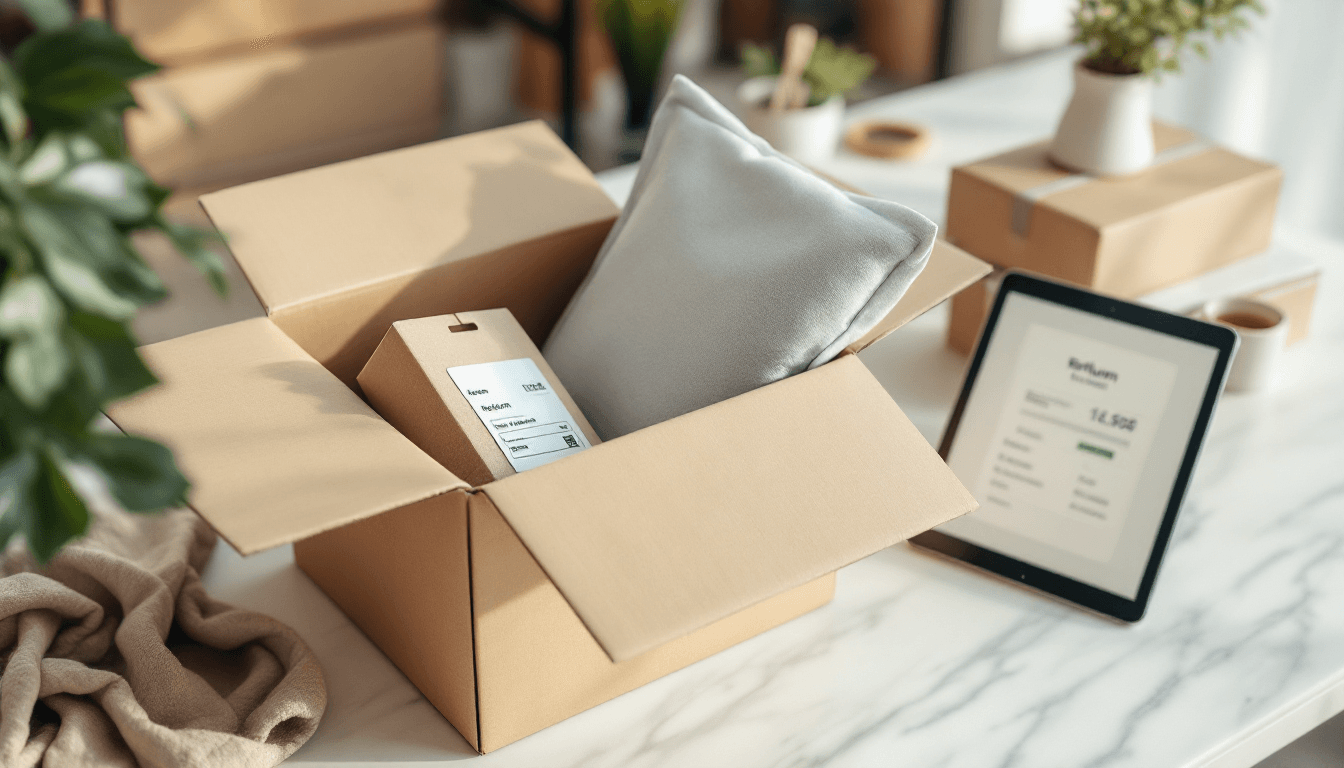
Here's a number that makes most eCommerce founders wince: the average eCommerce return rate is 20-30%. For apparel, it's even worse — 30-40%.
That means for every 10 orders you ship, 2-3 come back. That's not just lost revenue — it's shipping costs, restocking costs, refund processing fees, and potential product depreciation.
Most brands treat returns as a cost center. Something to minimize. Something to make harder. Something to hide behind a wall of customer service friction.
That's backwards.
The smartest eCommerce brands have figured out that returns are actually one of the best opportunities to build customer loyalty, drive repeat purchases, and protect revenue. Not by eliminating returns — you can't — but by turning every return into a chance to keep the customer and keep the money.
Here's how.
The Return Experience Is a Loyalty Event
Let me share some data that might surprise you:
- 92% of consumers say they'll buy from a brand again if the return process is easy (Narvar, 2025)
- 67% of consumers check the return policy before making a purchase
- 84% of consumers who have a positive return experience become repeat customers
- Customers who exchange (vs. refund) spend 15-25% more on their replacement order
The return isn't the end of the customer relationship. For many customers, it's the moment that decides whether there IS a relationship.
Think about your own behavior. When you return something and it's easy — free return shipping, quick refund, no interrogation — how do you feel about that brand? You probably think: "I'll shop there again because if it doesn't work out, no big deal."
When the return process is painful — confusing, slow, expensive — you think: "Never buying from them again."
The return experience has a disproportionate impact on brand perception because it's an emotionally heightened moment. The customer is already slightly frustrated (the product didn't meet expectations). How you handle that frustration determines what happens next.
Exchange-First Flows: The Revenue Retention Play
This is the single most impactful shift you can make in your return strategy: default to exchanges, not refunds.
When a customer initiates a return, the default option should be "Exchange for a different size/color/product" — not "Get a refund." The refund option should still exist (you're not forcing anything), but the exchange should be front and center.
Why exchanges beat refunds:
- You keep the revenue. An exchange keeps the money in your ecosystem. A refund sends it back to the customer's bank.
- Exchanges have lower net cost. The customer sends back the original product. You ship the new one. The cost is one shipping label, not a full refund.
- Exchange customers spend more. When customers browse for an exchange, they often find something they like better — and they'll add the price difference. We've seen exchange orders average 15-25% higher than the original order.
- Exchange customers are retained. A customer who gets a successful exchange is significantly more likely to buy again than a customer who gets a refund.
How to implement exchange-first flows:
Option 1: Loop Returns (The Gold Standard)
Loop Returns is the market leader in exchange-first return management. They've been purpose-built for Shopify and Shopify Plus stores.
How Loop works:
- Customer initiates a return through a branded portal (your domain, your branding)
- Loop presents exchange options first: "Want a different size?" "Different color?" "Something else entirely?"
- If the customer chooses an exchange, Loop handles the inventory swap, creates a new order, and generates the return label — all automatically
- If the customer insists on a refund, they can still get one — but the exchange is the default path
- Loop supports "bonus credit" — you can offer an extra incentive for choosing an exchange over a refund ("Exchange and get $10 bonus credit")
Loop's results (their published case studies):
- Average exchange rate: 40-60% of returns become exchanges (vs. 10-15% without Loop)
- Revenue retained: $1M+ brands typically retain $100K-$300K/year in revenue that would have been refunded
- Customer satisfaction: 4.7/5 average rating on the return experience
Loop pricing: Custom pricing based on return volume. Typically $500-$2,000/month for mid-market brands.
Option 2: Returnly (Now Affirm Returns)
Similar exchange-first approach with one unique feature: Returnly gives the customer instant store credit before the return is even shipped back. This means the customer can place their exchange order immediately, without waiting for the return to be received.
The psychology: "You have $65 in store credit right now. Shop your exchange." This eliminates the lag time where a customer might forget, lose interest, or buy from a competitor.
Option 3: AfterShip Returns
More affordable alternative to Loop. Solid exchange-first functionality with a self-service return portal. Better for smaller brands ($100K-$1M revenue) who want the exchange-first flow without Loop's enterprise pricing.
Pricing starts at $23/month.
Store Credit Over Refunds: The Middle Ground
Not every return can be an exchange. Sometimes the customer doesn't want anything else from your store. In those cases, offer store credit as an alternative to a refund.
The store credit pitch to the customer:
"We're sorry this didn't work out. You can get a full refund, or you can receive store credit for the full amount plus an extra 10% ($7.15 bonus) to use on any future purchase."
The math: An extra 10% bonus on store credit costs you far less than losing the customer entirely. If the original order was $65:
- Refund: You lose $65 plus return shipping costs
- Store credit with 10% bonus: You issue $71.50 in credit, which the customer will spend — and they'll likely spend more than $71.50 because the credit lowers the perceived cost of a new order
Results we've seen: When brands offer a 10% store credit bonus vs. refund, 35-45% of customers choose store credit. That's 35-45% of return revenue retained.
How to implement:
- Rise.ai is the leading store credit/gift card platform for Shopify. It integrates with Loop Returns and AfterShip for seamless "credit instead of refund" flows.
- Shopify's native gift card system can also work for smaller operations.
Turning Returns Into Data: What Returns Tell You
Every return is a data point. Most brands ignore this data. Don't.
What to track:
Return Reasons
Require a return reason for every return. Common reasons:
- Size too small / too large (sizing issue)
- Product doesn't match description/images (expectation gap)
- Quality issue / defective (product quality)
- Changed my mind / no longer needed (buyer's remorse)
- Arrived too late (shipping speed)
What to do with this data:
- Sizing issues dominate? Your size guide is wrong or missing. Fix it. Add a size quiz (Kiwi Sizing, True Fit). This alone can reduce size-related returns by 30-50%.
- Expectation gaps? Your product photography or description is misleading. Improve it. Add more product images, include video, show the product in context.
- Quality issues? You have a production problem. Talk to your manufacturer. This isn't a marketing fix — it's an operations fix.
- Buyer's remorse? This is normal. Reduce it with post-purchase reassurance emails ("Great choice! Here's how other customers are using their [product]").
- Shipping speed? Offer faster shipping options or set clearer delivery expectations.
Return Rate by Product
Some products have much higher return rates than others. Identify them.
If product A has a 5% return rate and product B has a 35% return rate, something is wrong with product B — the sizing, the photos, the description, or the product itself.
Action: Suppress high-return-rate products from paid advertising (you're literally paying for returns). Fix the underlying issue. Monitor the return rate after fixes.
Return Rate by Customer Segment
- First-time buyers have higher return rates than repeat buyers (they don't know your sizing yet)
- Customers acquired through certain channels may have higher return rates (influencer traffic tends to have higher returns due to impulse buying)
- Discount shoppers may return more (they buy impulsively during sales)
Use this data in your marketing strategy. If influencer-acquired customers have a 40% return rate, your influencer partnership ROI is much worse than it looks on the surface.
The Return-to-Klaviyo Integration
This is where returns become a retention marketing tool. By syncing return data with Klaviyo, you can create targeted flows that turn return experiences into repeat purchases.
Post-Return Follow-Up Flow
Trigger: Return processed (refund or exchange) Timing: 3 days after return is completed
For exchange customers:
- "Your exchange is on its way! We think you're going to love it."
- Include estimated delivery date
- Suggest a complementary product ("Pairs great with your new [exchange product]")
For refund customers:
- "We're sorry [product] wasn't the right fit. Your refund has been processed."
- Don't try to sell immediately — show empathy first
- 7 days later: "We'd love another chance. Here's 15% off your next order."
Size Recommendation Email
Trigger: Return reason is "size too small" or "size too large" Timing: Immediately after return is initiated
- "Looks like the size wasn't right. Based on what you ordered, we'd recommend [correct size]."
- One-click exchange to the recommended size
- Include your size guide link for reference
This email alone can convert 20-30% of size-related returns into exchanges.
Return Risk Segmentation
Use Klaviyo to segment customers by return behavior:
- No returns: These are your best customers. Standard marketing.
- 1 return: Normal. Include size recommendations and product details in future marketing.
- 2+ returns: Higher risk. Reduce discount-driven messaging (which drives impulse purchases and returns). Focus on education and product details.
- Serial returners (5+ returns): This segment costs you money. Consider: are they worth keeping? Some brands implement policies for serial returners (no free return shipping, no discount stacking).
Win-Back After Refund
Trigger: Customer received a refund AND has not purchased in 30 days Timing: 30 days after refund
- Acknowledge the return without dwelling on it
- Highlight new arrivals or best-sellers (different products than what they returned)
- Include a personal touch: "We've been adding some great new items since you last visited"
- Offer a modest incentive (10% off, free shipping) without being desperate
The Return Policy as Marketing Copy
Your return policy page is one of the most visited pages on your site. Treat it like a landing page, not a legal document.
What most return policies look like:
"Returns accepted within 30 days of purchase. Items must be in original condition with tags attached. Customer is responsible for return shipping. Refunds will be processed within 7-10 business days."
Boring. Scary. Adversarial.
What a marketing-oriented return policy looks like:
"Not in love with your order? No problem. We want you to be 100% happy. Here's how it works:
- 30-day returns — Changed your mind? Send it back within 30 days. No questions asked.
- Free return shipping — We'll email you a prepaid return label. No cost to you.
- Easy exchanges — Wrong size or color? We'll swap it for free and get the right one to you fast.
- Quick refunds — If you'd rather get your money back, we'll process your refund within 3 business days of receiving the return.
Have questions? Chat with us anytime or email returns@yourstore.com."
Same policy. Completely different experience. The second version reduces purchase anxiety, builds trust, and increases conversion rate.
The data on generous return policies:
Zappos built a billion-dollar business partly on their 365-day return policy. Their philosophy: a generous return policy increases purchase confidence, which increases conversion rate, which more than offsets the cost of returns.
Our data supports this. Brands that move from 14-day returns to 30-day returns typically see:
- 8-12% increase in conversion rate
- 5-10% increase in return rate (yes, more returns)
- Net revenue increase of 5-8% (the conversion lift more than covers the additional returns)
The extended window actually reduces return rates in some cases because it removes urgency. "I have 30 days" often turns into "I'll keep it" as the customer gets used to the product.
The Financials: Modeling the Impact
Let's put real numbers to this.
Scenario: A brand doing $2M/year with a 25% return rate
Current state (refund-only):
- Total returns: $500,000/year in returned products
- Revenue lost to refunds: $500,000
- Return processing costs: ~$25,000 (shipping, restocking, labor)
- Total cost of returns: ~$525,000
After implementing exchange-first + store credit incentives:
- Total returns: $500,000 (same number of returns)
- Converted to exchanges: 45% = $225,000 retained as exchanges
- Converted to store credit: 20% = $100,000 retained as store credit
- Refunded: 35% = $175,000 refunded
- Revenue lost to refunds: $175,000 (down from $500,000)
- Additional revenue from exchange upsells (15% uplift on exchanges): $33,750
- Loop Returns cost: ~$18,000/year
- Revenue retained: ~$358,750/year
- Net improvement: ~$306,750/year
That's over $300K in revenue recovered annually. On a $2M store. By changing how you handle returns — not by reducing them.
The Implementation Roadmap
Phase 1: Exchange-First Portal (Week 1-3)
- Choose your returns platform (Loop, AfterShip, or Returnly)
- Set up the branded return portal
- Configure exchange-first flow with bonus credit incentive
- Integrate with Shopify for automated inventory and order management
- Test the full flow: initiate return, choose exchange, receive new product
Phase 2: Store Credit Option (Week 3-4)
- Set up Rise.ai or Shopify gift cards for store credit
- Add 10% bonus credit option to the return flow
- Create store credit balance reminder emails in Klaviyo
Phase 3: Klaviyo Integration (Week 4-6)
- Sync return data to Klaviyo (most return platforms have native Klaviyo integrations)
- Build post-return follow-up flows (exchange confirmation, refund acknowledgment)
- Build size recommendation emails for size-related returns
- Build win-back flow for refund customers
Phase 4: Data and Optimization (Ongoing)
- Track return reasons monthly
- Identify high-return-rate products and fix root causes
- Monitor exchange rate, store credit adoption, and repeat purchase rate post-return
- A/B test return incentives (10% bonus vs. 15% vs. free shipping on next order)
The Mindset Shift
Stop thinking of returns as a cost to minimize. Start thinking of returns as a customer touchpoint to optimize.
Every return is a customer telling you: "I cared enough to buy from you. The product didn't work out. Now what?"
Your answer to "now what?" determines whether that customer buys from you again — or from your competitor.
Make the return easy. Default to exchanges. Offer store credit. Follow up with empathy. Use the data to fix problems. And watch your retention numbers climb.
Returns aren't the enemy. Bad return experiences are.
Want us to build your return-to-revenue strategy? We'll audit your current return process, set up an exchange-first flow, integrate with Klaviyo, and show you exactly how much revenue you can recover. Book a free strategy call.
Related Reads
- Social Proof for eCommerce: Beyond Star Ratings
- Retention vs. Acquisition: Where to Spend Your Budget
- Video Marketing for eCommerce
Mark Cijo is the founder of GOSH Digital, a full-service digital marketing agency that's helped 150+ eCommerce brands generate over $70M in tracked revenue. He's built return flows that recover hundreds of thousands in revenue — and he believes the return experience is one of the most underrated tools in eCommerce marketing.

Written by Mark Cijo
Founder of GOSH Digital. Klaviyo Gold Partner. Helping eCommerce brands grow revenue through data-driven marketing.
Book a free strategy call →