The Post-Purchase Experience: Where Repeat Revenue Is Made
The moment a customer buys is when most brands stop paying attention. That is exactly where the best brands double down.

Mark Cijo
Founder, GOSH Digital
Let me ask you something. What happens after someone buys from your store?
If your answer is "they get an order confirmation email and a shipping notification," you are doing the bare minimum. And you are leaving an enormous amount of money on the table.
The 48 hours after a purchase is the single most emotionally engaged moment in the entire customer relationship. The customer just made a decision. They are excited about what they bought. They are anticipating the delivery. Their attention and goodwill toward your brand are at an all-time high.
And what do most brands do with this golden window? They send a Shopify-default order confirmation template that looks like a receipt and then go radio silent until the next promotional email blast.
That is like going on an incredible first date and then not texting for three weeks.
The brands that dominate retention — the ones with 40%+ repeat purchase rates and customer LTVs that make their competitors sick — all have one thing in common: they invest heavily in what happens after the sale.
Why Post-Purchase Is the Highest-ROI Investment
Acquisition cost is already paid. You spent $30, $50, maybe $80 to acquire this customer through ads, content, and marketing. The post-purchase experience has zero additional acquisition cost. Every dollar of repeat revenue from this customer is pure margin improvement on your original CAC investment.
Attention is guaranteed. Your order confirmation email gets a 60-70% open rate. Your shipping notification gets 50-60%. Compare that to your promotional campaigns getting 15-25%. Post-purchase communications have the highest engagement rates of any email you send.
Emotional state is ideal. The customer is feeling good about their purchase. This is the psychological moment where brand loyalty is either built or squandered. A great experience cements the relationship. A mediocre one is forgettable. A bad one creates a detractor who warns their friends.
Buyer's remorse is real. Research shows that 20-30% of online shoppers experience some level of purchase doubt in the first 24 hours. A well-crafted post-purchase experience reassures them that they made the right choice, which reduces returns and increases satisfaction.
The Post-Purchase Experience Framework
Here is the framework we build for every eCommerce client. It covers the journey from order placement through 60 days post-delivery.
Phase 1: Order Confirmation (Immediate)
The order confirmation email is the most opened email you will ever send. Most brands waste it on a plain receipt.
What to include beyond the receipt:
A personal thank you. Not "Thank you for your order" in gray text. A genuine, branded, warm thank you. "Hey Sarah, welcome to the family. Your order is on its way and we are genuinely excited for you to try it."
What to expect next. "You will receive a shipping confirmation with tracking within 24-48 hours. Your order typically arrives in 3-5 business days."
Set the stage for the experience. If you sell skincare: "When your package arrives, here is how to start your new routine for the best results." If you sell food: "Your coffee was roasted yesterday — here is our brew guide." Start the product education before the product arrives.
Social proof reassurance. "You are joining 12,000+ customers who chose the Essential Kit this year. Here is what they are saying." One or two short reviews from happy customers. This combats buyer's remorse immediately.
Phase 2: Shipping and Tracking (1-2 Days After Order)
Shipping notifications are another high-engagement touchpoint that most brands leave as a default Shopify template.
Upgrade your shipping notification:
Use a branded tracking page instead of sending people to the carrier's generic tracking site. Tools like Wonderment, Malomo, or AfterShip let you create a branded tracking page on your own domain. This page gets visited 3-5 times per order on average — that is 3-5 additional brand impressions you are currently giving to UPS or USPS.
On that tracking page, add product education content, a "while you wait" section with tips or content related to their purchase, and a gentle cross-sell of complementary products.
Phase 3: Delivery Follow-Up (Day of Delivery or Day After)
Most brands never send a delivery follow-up. The customer receives their package and hears nothing from the brand.
What to send:
"Your order has arrived! Here's how to get the most out of it." Link to a product guide, tutorial video, or FAQ. For consumable products, include usage instructions and storage tips. For apparel, include styling suggestions. For tech products, include setup guides.
This email does two things: it shows you care about their experience beyond the sale, and it increases the chances they actually use the product (which is the single biggest driver of repeat purchases and positive reviews).
Phase 4: Review Request (5-7 Days After Delivery)
Timing matters here. Ask too soon and they haven't used the product enough to have an opinion. Ask too late and the excitement has faded.
5-7 days after delivery is the sweet spot for most products. For products that take longer to show results (skincare, supplements), extend this to 14-21 days.
How to ask:
Keep it simple. "How are you liking your new [product]? Your honest review helps other customers make the right choice." Include a direct link that takes them straight to the review form — not to the product page where they have to find the review section.
Pro tip: Make leaving a review easy. Star rating plus one sentence is all you need. Don't ask for a title, a summary, a detailed review, and a photo all in one request. That is too much friction. You can request a photo in a follow-up to reviewers who already left a written review.
Phase 5: Cross-Sell (7-14 Days After Delivery)
Now — and only now — is it appropriate to recommend additional products. The customer has received their order, had time to use it, and (ideally) just left a positive review.
The cross-sell should be relevant and helpful, not pushy:
"You bought the Daily Moisturizer. Here is what most customers add to their routine next: the Vitamin C Serum." Include a brief explanation of WHY this product complements what they already bought.
Use Klaviyo's catalog feed and product recommendation engine to serve personalized cross-sell suggestions based on what the customer bought and what similar customers have purchased.
Phase 6: Replenishment Reminder (Consumption-Based Timing)
For consumable products, send a replenishment reminder based on the average consumption cycle.
30-day products (monthly supplements, skincare): Send at day 25 60-day products (larger bottles, multi-packs): Send at day 50 90-day products (seasonal items): Send at day 80
The message: "Running low on your [product]? Reorder now so you don't run out." Include a one-click reorder link that pre-populates their cart with the same product. Make it as frictionless as possible.
Phase 7: Win-Back Prevention (30-60 Days Post-Purchase)
If a customer hasn't purchased again within 60 days of their first order, they are at risk of churning. Don't wait until they are gone to try to win them back.
What to send at 30 days (if no second purchase): A content-focused email. Not a discount. Not a "we miss you" message. Instead: "3 ways to get more out of your [product]" or "What our best customers do in their first month." Value-first, education-focused.
What to send at 45 days: A new product recommendation or a bestseller roundup. "Have you seen what's new since your last order?" Show them something they haven't seen before.
What to send at 60 days: Now you can offer a small incentive. "It's been a while — here's 10% off your next order, valid this week." This is a recovery play, not a regular promotion.
The Unboxing Experience (Physical Post-Purchase)
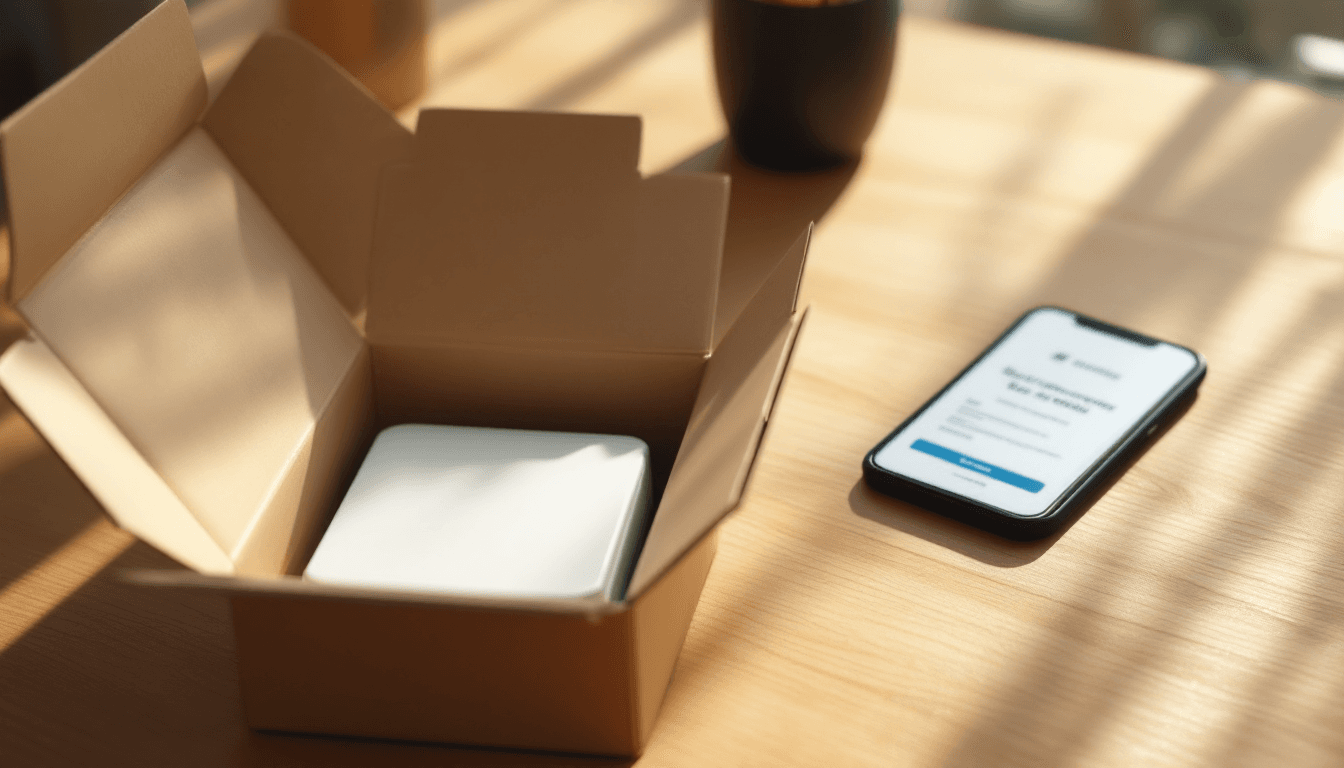
Everything I have described so far is digital. But the physical unboxing experience matters enormously.
The box itself. Custom branded packaging costs more than generic brown boxes, but it creates an emotional moment that customers photograph and share. If custom boxes are outside your budget, branded tissue paper, stickers, and a thank-you card inside a standard box accomplish most of the same effect at a fraction of the cost.
The insert card. Include a physical card in every order. On one side: a genuine thank you and the founder's signature. On the other side: a QR code linking to product usage tips, a referral program, or a community signup. Physical cards have a permanence that emails don't — people put them on their desk, stick them on their fridge, or snap a photo.
A surprise. A small, unexpected sample of another product. A handwritten note (even if it's printed to look handwritten). A branded sticker. Something that was not promised in the product listing but shows up in the box. The element of surprise creates delight, and delight creates loyalty and word of mouth.
Measuring Post-Purchase Experience Performance
Second purchase rate by cohort. What percentage of customers who bought in January made a second purchase within 60 days? 90 days? Track this monthly. A rising second-purchase rate means your post-purchase experience is working.
Time to second purchase. How many days between first and second purchase? Your post-purchase emails should be shortening this gap over time.
Post-purchase email engagement. Track open rates and click rates for each email in your post-purchase sequence. The delivery follow-up and cross-sell emails should have the highest engagement.
Review generation rate. What percentage of customers leave a review after your review request email? Benchmark is 5-10%. If you are below 3%, your timing or ask needs work.
Return rate. A strong post-purchase experience that educates customers on proper product use reduces returns. Track return rate before and after implementing post-purchase improvements.
The ROI Case
Let me put numbers to this. Take a brand doing $2M annually with a 15% repeat purchase rate and $80 AOV.
If you improve the repeat purchase rate from 15% to 25% through better post-purchase experience, here is what happens:
Before: 25,000 total orders. 3,750 repeat orders. $300K in repeat revenue. After: 25,000 total orders. 6,250 repeat orders. $500K in repeat revenue.
That is $200K in additional annual revenue from customers you already acquired. Zero additional acquisition cost. The only investment is the time and tools to build the post-purchase sequence.
The post-purchase experience is not a nice-to-have. It is the highest-ROI investment in your entire marketing stack. Every dollar you spend on making the post-purchase experience great comes back multiplied through repeat purchases, referrals, reviews, and lifetime value.
Related Reads
- Customer Lifetime Value: The Metric That Matters Most
- eCommerce Analytics: What to Track and Why
- 7 Conversion Rate Fixes That Don't Require a Redesign
If your post-purchase experience is just a Shopify default order confirmation, we should talk.

Written by Mark Cijo
Founder of GOSH Digital. Klaviyo Gold Partner. Helping eCommerce brands grow revenue through data-driven marketing.
Book a free strategy call →