Trump's 2026 Tariffs Broke Your Margin. The Shopify Brands
Universal 10-50% tariffs on 180 countries. De minimis exemption gone. Vietnam now the top US supplier of laptops and consoles.

Mark Cijo
Founder, GOSH Digital
In April 2026, the Trump administration's universal tariff policy hit its full operating tempo: 10% minimum, 50% maximum on imports from 180 countries, with the de minimis exemption that protected sub-$800 imports from any duty wiped out by executive order.
If you're a Shopify merchant, three things happened to your margin in the last 6 months:
- Your landed cost on imported goods went up between 8% and 35% depending on origin country
- The de minimis loophole that let you ship low-value packages duty-free from overseas suppliers is gone
- Your competitors who were running the exact same supply chain as you suddenly stopped — and now ship from Vietnam, Mexico, or Eastern Europe instead
Bloomberg's customs data analysis shows Vietnam quietly became the top US supplier of laptops and game consoles for the first time. That's a structural reshuffling, not a temporary shift.
The brands that figured out how to use AI for supply chain pivot and operational efficiency are coming out of this with higher margins than they had pre-tariff. The brands that didn't are watching their P&L drift toward zero.
Here's the AI sourcing stack the winners are running. Total monthly cost: under $300.
What broke
A quick framing for what actually changed in 2026:
- Universal tariffs with country-specific rates: China at the high end (sometimes 50%+), Mexico/Vietnam/EU in the middle (10-25%), select trade-deal partners at the floor (10%). Source: Tax Foundation.
- De minimis exemption gone. Previously, packages under $800 imported from overseas paid zero duty. This was the entire business model for many DTC brands shipping from overseas suppliers direct-to-customer. That's over now.
- Pharmaceutical tariffs under the April 2026 fact sheet. Supplement and wellness brands sourcing patented inputs got hit hardest here.
- $1,500 average tax increase per US household in 2026 — meaning your customers also have less discretionary spend, on top of your higher landed cost.
The full hit landed in Q1 2026. Most Shopify brands realised something was wrong in February when their margin tightened by 12-25 points. The ones who reacted by May 2026 are now running a different supply chain. The ones who haven't are still bleeding.
The AI sourcing stack — what the winners are running
Five tools. None of them are exotic. All of them work together. Total monthly cost: roughly $250-300 depending on volume.
1. Tariff-aware sourcing intelligence ($79-149/month)
The biggest unlock. Tools like TariffPro, Avalara Tariff Code, and Customs Info Database plug into your Shopify product catalog, classify every SKU by HS code, and surface the actual landed cost from every country your supplier base is in.
What this means in practice: a 30-minute conversation in your Shopify admin tells you whether to move production from China to Vietnam or Mexico for each product line — based on actual current tariff rates, your specific HS code classifications, and the all-in landed cost including shipping.
Most merchants are making sourcing decisions on instinct. The brands that adapted are making them on data. The difference is 5-15 points of margin.
2. AI supplier discovery + outreach ($59/month)
Sourcing platforms like Alibaba.com's AI-powered search (free up to a point) combined with outreach automation tools (Apollo at $59/month for the basic tier) let you build a supplier shortlist in days instead of weeks.
The query you'd run: "50 Vietnamese suppliers manufacturing [your product category], MOQ under 500 units, with verified export experience to the US." AI processes through the platform's database, surfaces matches, and you push outreach in bulk.
The brands that moved fastest from China to Vietnam in Q1 2026 used exactly this workflow. Suppliers found in 7-10 days. Sample shipments in 21 days. Production switch live in 60-90 days. Total tariff hit absorbed: zero.
3. AI-led product copy + listing localisation ($30/month)
When you switch supplier countries, your product specifications change slightly. New materials, slightly different dimensions, different MOQ economics. Your existing product copy needs updating across hundreds of SKUs.
ChatGPT Pro plus a workflow tool like Make.com (or Zapier on the AI tier) lets you batch-rewrite product descriptions, alt text, and meta data in bulk. What used to be a 3-week project for a content team is now a 4-hour project for one person.
We covered similar workflow patterns in our Shopify Winter '26 Edition breakdown — Sidekick can now edit themes via natural language. Same dynamic applies to copy. The merchants using AI for the routine 80% of copy work are running circles around the merchants still hand-editing product pages one at a time.
4. Demand forecasting + inventory rebalancing ($49/month)
Tariff shifts changed where you should hold inventory and how much. Tools like Inventory Planner (basic tier $49/month) plug into Shopify and Klaviyo data to forecast SKU-level demand, factor in supply chain lead times by country, and rebalance your stock recommendations accordingly.
Without this, brands hit double margin compression: tariff increases on inputs PLUS stockouts on their best-selling SKUs because they didn't adjust ordering for longer lead times from the new supplier country.
5. AI-led ad creative localisation + multi-market expansion ($79/month)
This is the underrated one. When your US margin gets squeezed, the obvious play is to expand to higher-margin international markets — Canada, UK, Australia, EU — where your products still have differentiated pricing power.
AdCreative.ai, Pencil, or similar AI ad-creative platforms let you generate market-localised ad creative at scale for $79/month. What used to require a creative team or agency to produce 50 ad variants for 5 markets is now a one-day workflow. We've seen brands meaningfully de-risk their US-tariff exposure by aggressively pushing into international markets where the unit economics still hold.
We help brands structure international expansion through our paid media services — the case study for The Phoenix at 3x ROAS across $23M in spend was largely a US-focused account, but the same architecture works for international scale.
What this AI stack actually does (in plain English)
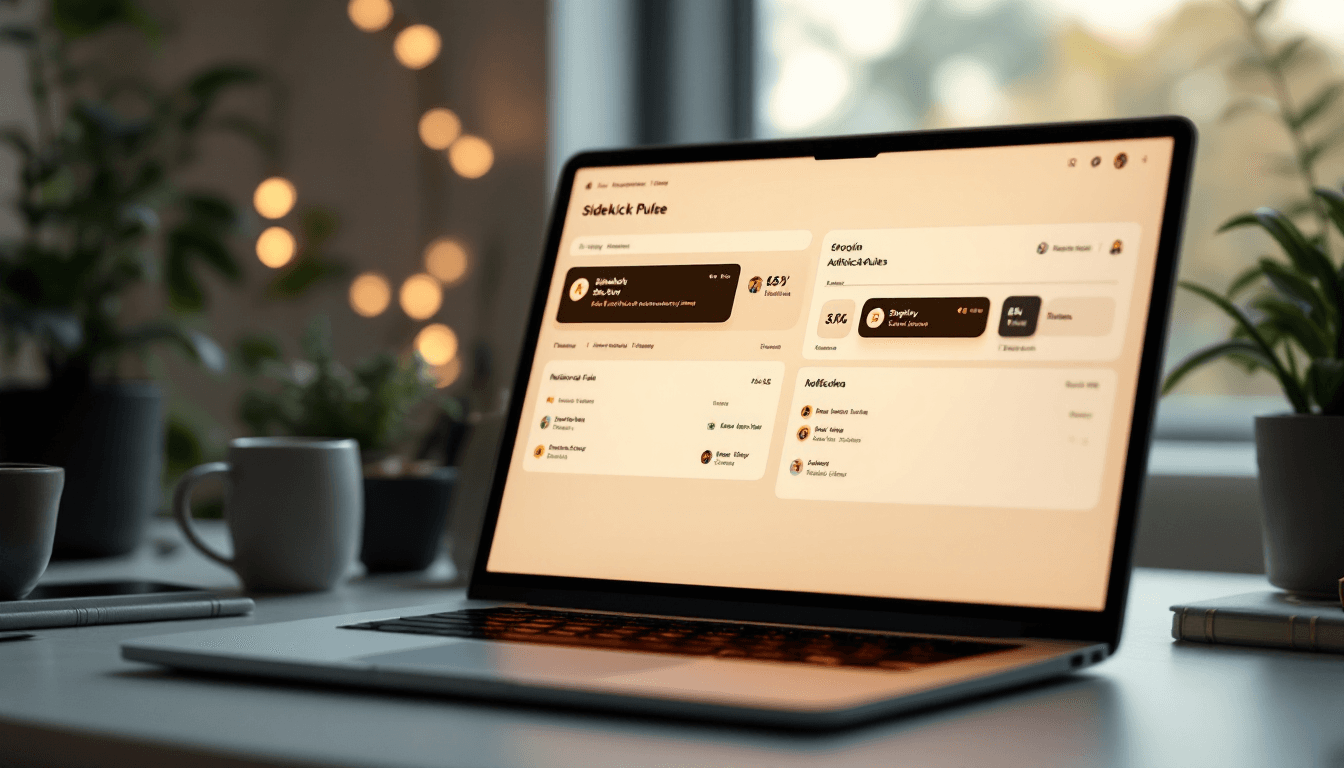
You wake up Monday morning. You log into Shopify. Sidekick Pulse shows you:
- Your Chinese-sourced SKU #387 is now landing at $12.40/unit (was $9.20) after tariffs. Margin at current retail price is 18% (was 34%).
- Three alternative Vietnamese suppliers have been identified for an equivalent product. Estimated landed cost: $9.80/unit.
- Inventory Planner shows you have 8 weeks of stock at current pace. New supplier lead time is 6 weeks. Decision needed by Friday to avoid stockout.
- AI ad creative platform has generated 12 new ad variants for the UK market where your retail price holds the original 34% margin.
You make 3 decisions in 20 minutes. Two months later your margin has recovered, your Vietnamese supplier is running production, and your UK ad spend is at 3x ROAS in a market that didn't get hit by US tariffs.
That's the operating model. It's not magic. It's just AI-assisted speed on the work that used to take weeks per cycle.
The brands that didn't adapt
The brands that bled the most through Q1-Q2 2026 are the ones that did one of three things:
- Tried to absorb the tariff hit in margin — eating 15-25% margin compression instead of pivoting supply. P&L collapsed by Q2.
- Raised prices to maintain margin without competitive analysis. Lost market share to faster-pivoting competitors who held price by sourcing elsewhere.
- Tried to hand-manage the sourcing pivot without AI tooling. Project took 6-9 months instead of 60-90 days. Cash flow ran out before the pivot completed.
The merchants who got this right ran the AI stack from January 2026 onwards. The merchants who got it wrong are still using the same spreadsheet workflow they had in 2023.
What we'd do this quarter for your brand
If you're a Shopify brand and the tariff hit is bleeding your margin — here's the audit we'd run:
- Map every SKU to country of origin and calculate current landed cost vs. pre-tariff baseline
- Identify the top 10 SKUs by margin impact — these are your highest-priority sourcing pivot candidates
- Run the AI supplier discovery workflow on those 10 SKUs across Vietnam, Mexico, Eastern Europe, India
- Test international ad expansion for the markets where your unit economics still hold
- Rebuild your email program to account for slightly higher pricing where you've had to raise — the retention math gets harder when your competitors might be cheaper, so your retention machine has to work harder
This is exactly the kind of cross-functional work our Shopify development and growth services integrate with email and SMS and paid media. Tariff response isn't a marketing problem or a sourcing problem — it's a whole-business problem that needs orchestrated response. We help clients structure that end-to-end.
Book a free strategy call and we'll walk through your specific tariff exposure and the AI sourcing stack we'd deploy to absorb it. The brands that act now will be operating at pre-tariff margins by Q4 2026. The brands that wait will be operating on 1/3 the margin they had two years ago.
The honest summary
The 2026 tariff regime was a structural shift, not a temporary disruption. Trade policy doesn't reverse overnight, and even if it did, the brands that rebuilt their supply chain in Q1-Q2 2026 will have permanently better cost structures than the ones that didn't.
The good news: the AI stack to do this costs under $300/month and produces results in 60-90 days. The bad news: every quarter you delay is a quarter of margin you don't get back.
The brands that adapt now win the next 8 years of eCommerce. The brands that wait will be acquired by them.
Sources:
- Tariff Tracker: 2026 Trump Tariffs & Trade War — Tax Foundation
- U.S. Tariffs Update — June 5, 2026 — Fred Law
- Donald Trump's executive orders on trade and tariffs, 2025-2026 — Ballotpedia
- How Trump's Tariffs Altered Global Supply Chains — Bloomberg
- Pharmaceutical tariffs fact sheet — The White House

Written by Mark Cijo
Founder of GOSH Digital. Klaviyo Gold Partner. Helping eCommerce brands grow revenue through data-driven marketing.
Book a free strategy call →