The Metrics
- 15,996 total customers in database
- 17,087 cold customer profiles
- 8,608 customers who received zero emails in 365 days
- 3,715 lost customers tied to the 2022 formula change
- 9 lifecycle flows built from scratch
- 14 custom segments architected
- 40+ emails written and built
- 41.6% open rate on the reactivation campaign (cold list)
- 7.56% click rate on the same send
- 0 spam complaints during the entire rollout
Before: A Brand People Loved Had Gone Quiet
Raw Rev spent more than two decades building loyalty around clean ingredients and trust-driven positioning.
Then the formula changed.
Customers noticed immediately. Many stopped buying. Reviews turned negative. And while the original formula was eventually restored, a huge portion of the audience never found out.
By the time we audited the account, the numbers told one story clearly:
- Fewer than 10% of customers had engaged in the last 90 days
- Over half the list had not received a single email in a year
- Thousands of former customers had quietly disappeared after the formula change
And underneath all of that: no lifecycle infrastructure existed.
No welcome flow. No post-purchase system. No abandonment recovery. No winback logic. No segmentation architecture protecting deliverability.
The channel wasn't underperforming. It was dormant.
The Real Risk Wasn't Revenue. It Was Deliverability.
The easiest thing to do would have been to blast the entire list with a discount campaign.
It also would have been the fastest way to damage the domain permanently.
The account hadn't been emailed consistently in over a year. Sending aggressively to cold audiences without safeguards would almost certainly trigger spam complaints, bounce spikes, and inbox placement issues. The kind that take months to recover from — if you recover at all.
So before writing a single campaign, we built the infrastructure first.
Building the Foundation
We rebuilt the account around segmentation, suppression logic, and deliverability protection.
14 custom segments were created across four categories:
- Campaign send pools
- Customer recovery pools
- Suppression and risk segments
- Reusable exclusion audiences
Every audience was designed to control risk while making future campaigns measurable and scalable.
We also established strict account-wide rules:
- No engagement logic based on Apple Mail opens (they're not real opens)
- All segmentation driven by clicks, purchases, and real activity
- Controlled batch sending to cold audiences
- Suppression logic applied before every send
- Smart sending enabled globally
This wasn't cleanup. It was rebuilding trust at the infrastructure level.
The Insight That Changed Everything
Most brands would have treated this as a discounting problem.
It wasn't.
Customers didn't leave because they stopped caring about Raw Rev. They left because the product changed — and nobody had told them it was fixed.
That single observation shifted the entire strategy. Instead of leading with promotions, we built a trust-first reactivation campaign centered on transparency.
"The Formula Is Back"
We created a 4-email recovery campaign designed to reconnect former customers with the brand.
Not through hype. Not through urgency. Through honesty.
The messaging acknowledged what happened, explained what changed, and invited customers back without pressure. Founder voice became central to the communication strategy. The rollout itself was carefully staged across warm and cold audience waves to protect sender reputation.
The first campaign validated the approach immediately.
The First Send
5,633 recipients. Many of them cold or long inactive.
Results after 24 hours:
| Metric | Result |
|---|---|
| Open rate | 41.6% |
| Click rate | 7.56% |
| Orders | 13 |
| Spam complaints | 0 |
For a heavily dormant list, those numbers mattered. But the more important part was this: the infrastructure held. Segmentation worked. Deliverability stayed intact. Customers responded to the message.
We'd just proven the list wasn't dead. It had been mishandled.
Then We Built the Revenue Engine
Campaigns create spikes. Flows create systems.
Once the trust recovery structure was in place, we built the entire lifecycle ecosystem from the ground up.
The final build included:
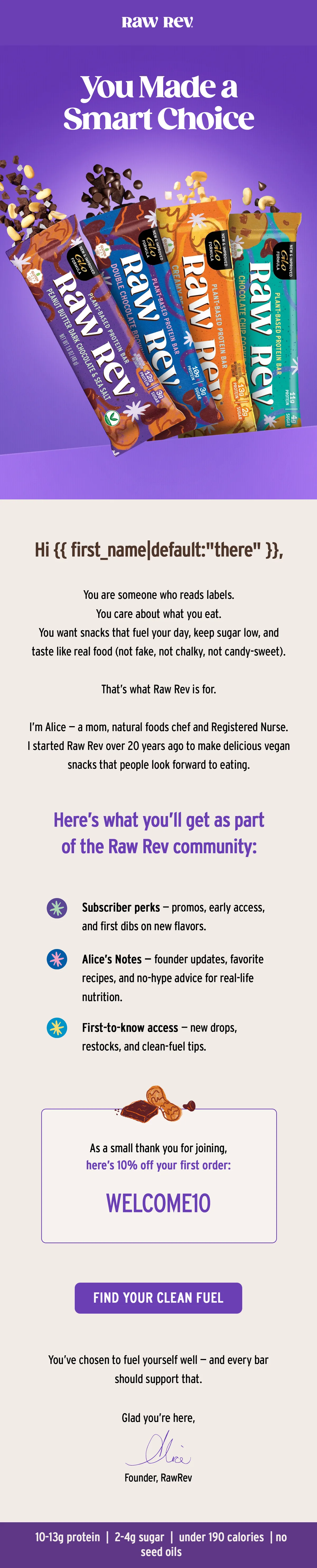
- Welcome Flow
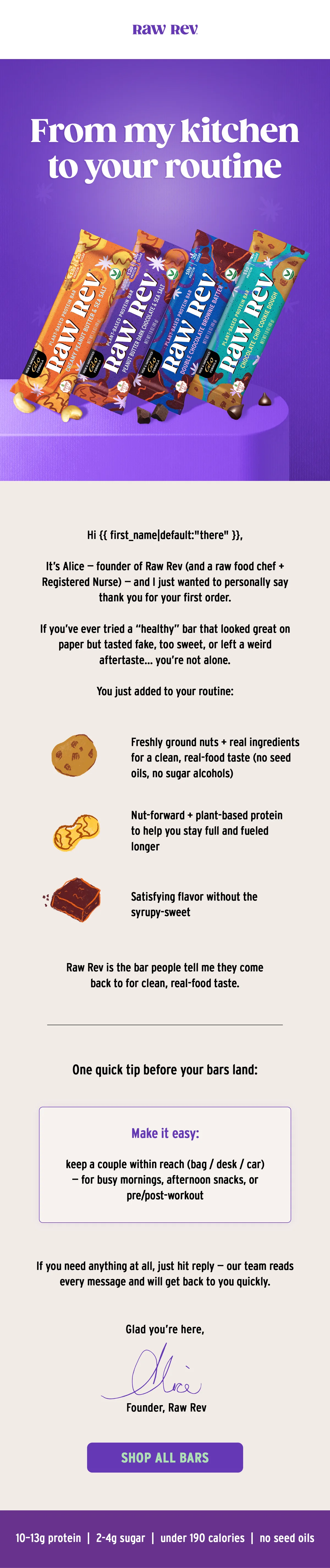
- Post-Purchase Flows (first-time + repeat buyers)
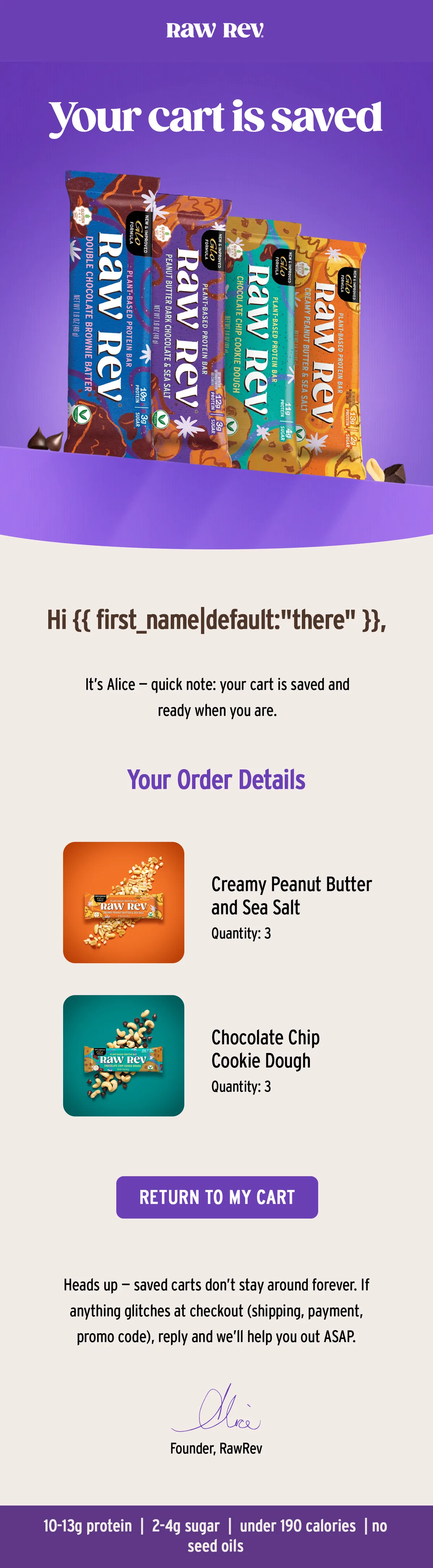
- Abandoned Checkout
- Abandoned Cart
- Browse Abandonment
- Winback Flow
- Replenishment Flow
- Cross-Sell Flow
- Sunset Flow
Totals: 9 flows, 40+ emails, founder-led copy direction throughout, conditional logic across lifecycle stages, subscription-focused retention structure, and deliverability-safe automation architecture.
What Made The System Different
The flows weren't generic eCommerce automation.
Everything tied back to how Raw Rev customers actually behave.
The replenishment sequence wasn't triggered by arbitrary dates — it was timed around realistic consumption windows. Cross-sell recommendations weren't random product pushes — flavor suggestions changed dynamically based on previous purchases. Discounts were used selectively and intentionally — often delayed until the final touchpoint instead of introduced immediately.
The system was designed to rebuild trust, protect margins, create habit, and increase long-term customer value.
Not just drive short-term spikes.
What This Actually Proved
Raw Rev didn't need "more emails."
They needed:
- Structure
- Segmentation
- Trust-based messaging
- A lifecycle system capable of compounding over time
The account went from no meaningful flow infrastructure, a cold and neglected list, and broken customer communication — to a fully operational retention system built for long-term growth.
At a Glance
| Build Metric | Result |
|---|---|
| Custom segments built | 14 |
| Lifecycle flows created | 9 |
| Emails written and structured | 40+ |
| Reactivation campaign open rate | 41.6% |
| Reactivation campaign click rate | 7.56% |
| Spam complaints during rollout | 0 |
A Note on This Project
Raw Rev refused to pay for the work after it was delivered.
We later learned — through research we did after the engagement ended — that the brand was dealing with financial issues much bigger than anyone, including us, realized at the time. That context doesn't excuse what happened, but it does explain it. And it's the reason we're not framing this as a relationship breakdown. It wasn't. The team we worked with was responsive. The work shipped. The campaigns performed. The pressure underneath the business was simply larger than what was visible from the outside.
We're publishing the case study anyway. The reason is simple: the outcome of the work doesn't change based on how the engagement ended. The segmentation system was built. The flows were created. The deliverability infrastructure was implemented. The campaigns performed. The work remains something we're proud of — and the lessons from it shaped how we approach early-stage brands going forward.
Projects like this are part of what inspired an internal initiative we're developing at GOSH — focused on helping promising brands build the kind of marketing infrastructure they otherwise may never get access to early enough.
Because sometimes the difference between a struggling brand and a scalable one isn't the product. It's the system behind it. And sometimes — as this project taught us — that system gets built before anyone realizes how heavy the load on the business already is.
Final Takeaway
A neglected email list is not a dead asset.
But reviving it takes more than campaigns. It takes infrastructure, sequencing, restraint, and messaging people actually believe.
That's what we built for Raw Rev.
Have a list that's gone quiet — or one that never had a chance to grow? Tell us your story.