
The Metrics
- $893K total attributed revenue (+65.6% YoY)
- $495K flow revenue (+79.9% YoY)
- $398K campaign revenue (+50.7% YoY)
- $73.9K SMS revenue — new channel in 2025
- 10.96M email recipients reached (+230% YoY)
- 55.43% of attributed revenue came from flows
- $107K generated by the Welcome Flow alone (at $1.90 per recipient)
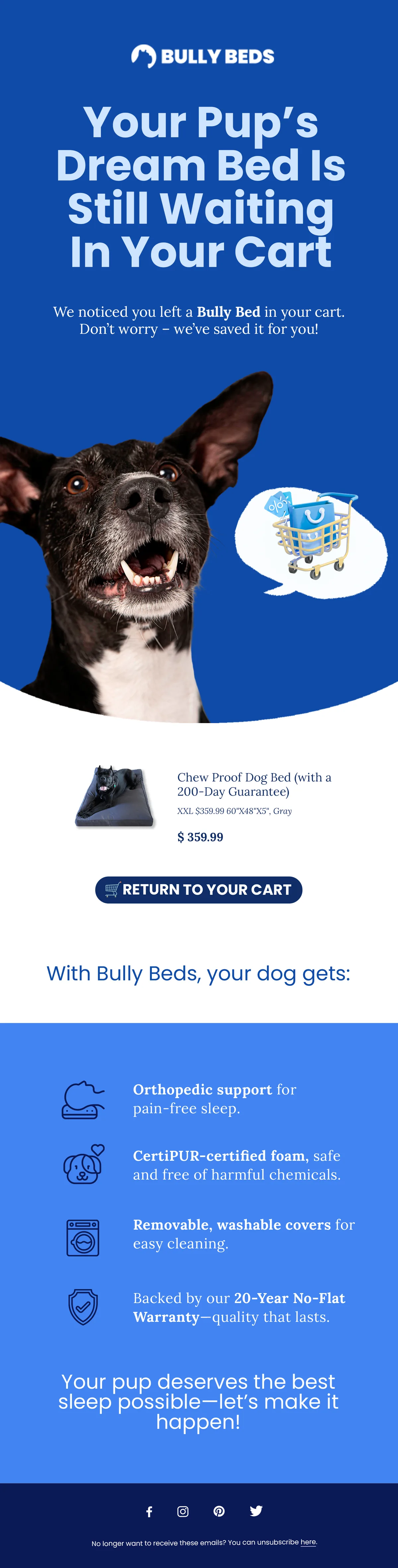
- $4.52 revenue per recipient on Abandoned Checkout — the most efficient asset in the account
- 26.3% click rate on SMS campaigns
- $161.4K generated by three flows that were still in Draft status
Klaviyo accounted for 41.47% of total store revenue ($2.15M) over the period.
Before: Growth Was Happening, But Efficiency Was Starting to Slip
Bully Beds had the fundamentals. Strong product. Loyal customer base. A working Klaviyo setup. Revenue was already moving.
Then they scaled.
And once they scaled, the real issue showed up: volume was growing much faster than efficiency.
The list expanded aggressively. Reach exploded. But clicks barely moved. Revenue per recipient declined. Campaign engagement dropped. Meanwhile — and this is the part most teams miss — several of the highest-performing flows weren't even fully live yet.
The opportunity wasn't "send more." It was to turn Klaviyo from a working channel into a scalable revenue system.
That's a different brief entirely.
What We Focused On
We worked the account across three layers — in this order.
1. Build around flows, not sends
The data made the direction obvious. Flows were already outperforming campaigns at a fraction of the volume. So instead of treating automation as supporting infrastructure, we treated it like the core revenue engine.

2. Add SMS where it creates leverage
SMS wasn't bolted on as a "we should be doing SMS" checkbox. It launched as a high-intent companion channel — used where speed and immediacy actually matter (cart abandonment, post-purchase, low-inventory triggers). A second channel with real commercial upside, not a list-blast tool.
3. Scale the system without losing visibility
As recipient volume climbed, the priority wasn't just growth — it was making sure the account got clearer as it scaled, not messier. Knowing where revenue was actually coming from. Which assets were doing the heavy lifting. Where the next layer of scale could be unlocked without guesswork.
What Happened: Flows Became the Revenue Backbone
This is where the account got interesting.
Flows generated $495,183 from 586,378 recipients. Campaigns generated $398,116 from over 10.6 million recipients.
Read that gap again.
Campaigns created reach. Flows captured intent. The strongest performers were exactly where you'd expect them:
- Welcome Flow — $107K at $1.90 per recipient
- Abandoned Checkout — $54.8K at $4.52 per recipient, the highest efficiency in the account
- Browse Abandoned + Abandoned Cart — already generating strong revenue despite sitting in Draft for part of the year
That last point matters more than the headline number. It means the account wasn't just producing — it was still sitting on untapped leverage we hadn't even shipped yet.
SMS Went From New Channel to Real Revenue Driver
SMS launched in March 2025 and generated $73.9K in attributed revenue within the year. Strong on its own.
The more important number: SMS flows generated roughly $1.55 per recipient — significantly outperforming email campaign revenue per recipient. That validated SMS immediately as more than a retention add-on. It became a high-engagement, high-intent channel with real upside.
In other words: Bully Beds didn't just grow email. They built a more diversified owned-channel system.
Campaigns Still Played a Role — Just a Different One
Campaigns generated $398K and remained a major contributor, especially around promotional windows and Q4 pushes.
The interesting takeaway wasn't that campaigns underperformed. It was that they revealed exactly what this audience responds to.
Top-performing sends were dominated by Open Box + Clearance Sale campaigns — appearing three times in the top five. That tells you something valuable: this audience converts especially well when the offer is framed around value and urgency, not broad discounting.
That kind of pattern is what turns campaign sending from repetition into strategy.
Q4 Proved the System Could Scale
Q4 was the clearest proof point. Across both campaigns and flows, revenue surged through November and December. Attributed revenue in those months hit roughly $114K per month — nearly double the January–September baseline.
Flows carried most of that uplift. Which confirmed the most important thing about the build: the automation layer wasn't just stable, it was compounding.
This wasn't a one-off spike from a single great send. It was the result of a system that was already working — then getting amplified when seasonal demand arrived.
The Hidden Opportunity
One of the strongest parts of this case study isn't what was achieved. It's what got revealed.
Three top-performing flows were still in Draft status:
- Browse Abandoned
- Abandoned Cart
- Customers.ai Browse Abandoned
Together, they generated $161.4K — without being fully live for the full year.
That's not just an observation. That's a roadmap. It means the account wasn't capped out. There was still meaningful revenue available without reinventing the system.
What This Proves
A lot of brands grow list size and mistake that for growth.
But real growth is what happens when:
- The system knows how to convert attention
- Automation carries revenue — not just campaigns
- New channels are introduced with purpose
- The account becomes clearer as it scales, not messier
That's what happened here.
Bully Beds didn't just add volume. They built a stronger retention engine underneath it.
Results at a Glance
| Metric | Result |
|---|---|
| Total attributed revenue | $893K (+65.6% YoY) |
| Flow revenue | $495K (+79.9% YoY) |
| Campaign revenue | $398K (+50.7% YoY) |
| SMS revenue | $73.9K (new in 2025) |
| Welcome Flow revenue | $107K |
| Abandoned Checkout revenue per recipient | $4.52 |
| SMS campaign click rate | 26.3% |
Final Takeaway
This wasn't list growth. It was the shift from channel activity to channel infrastructure.
And once that shift happened, revenue followed.
Ready to make the same shift? Book a free strategy call or see how we've done it for other brands.